
What Is Systemic Listening Therapy? A Complete Guide
You may have come across the term while researching options for your child. Or perhaps a friend mentioned it after noticing changes in their own focus and sleep. Systemic Listening Therapy is not yet widely known in India, but for the families and adults who have experienced it, the results often speak for themselves.
So what is it, exactly? And how does sitting in a room listening to music through headphones lead to meaningful changes in how a person focuses, communicates, and regulates their emotions?
The basics
Systemic Listening Therapy (SLT) is a non-invasive therapeutic approach that uses specially modulated classical music, delivered through bone-conduction headphones, to retrain the way your brain processes sound. It is rooted in the groundbreaking research of Dr. Alfred Tomatis, a French ear, nose, and throat physician who discovered a fundamental link between the ear, the voice, and the brain in the 1950s.
Dr. Tomatis observed that when people’s ability to listen improved, so did their ability to learn, communicate, and regulate their emotions. He developed a method of filtering and modifying music to exercise specific functions of the auditory system, creating what he called the “Electronic Ear.”
Since 2007, the Auris Integralis Institute in Germany has refined and expanded Dr. Tomatis’s work, incorporating findings from neurobiology, neuropsychology, and attachment research. This modern evolution is what we now call Systemic Listening Therapy. It is the approach I trained in, and it is what we practice at Sonum.
How it actually works
During an SLT session, you sit in a calm, comfortable space and listen to classical music (primarily Mozart) through specialised headphones that deliver sound through both air conduction and bone conduction. The music has been digitally processed so that its frequency spectrum shifts continuously between higher and lower frequencies.
These shifts create an alternating effect: some frequencies calm the nervous system, while others gently stimulate it. This contrast is what trains the brain. It is a bit like interval training for your auditory system. The brain learns to process sound more efficiently, which has wide-reaching effects on focus, emotional regulation, language processing, and overall well-being.
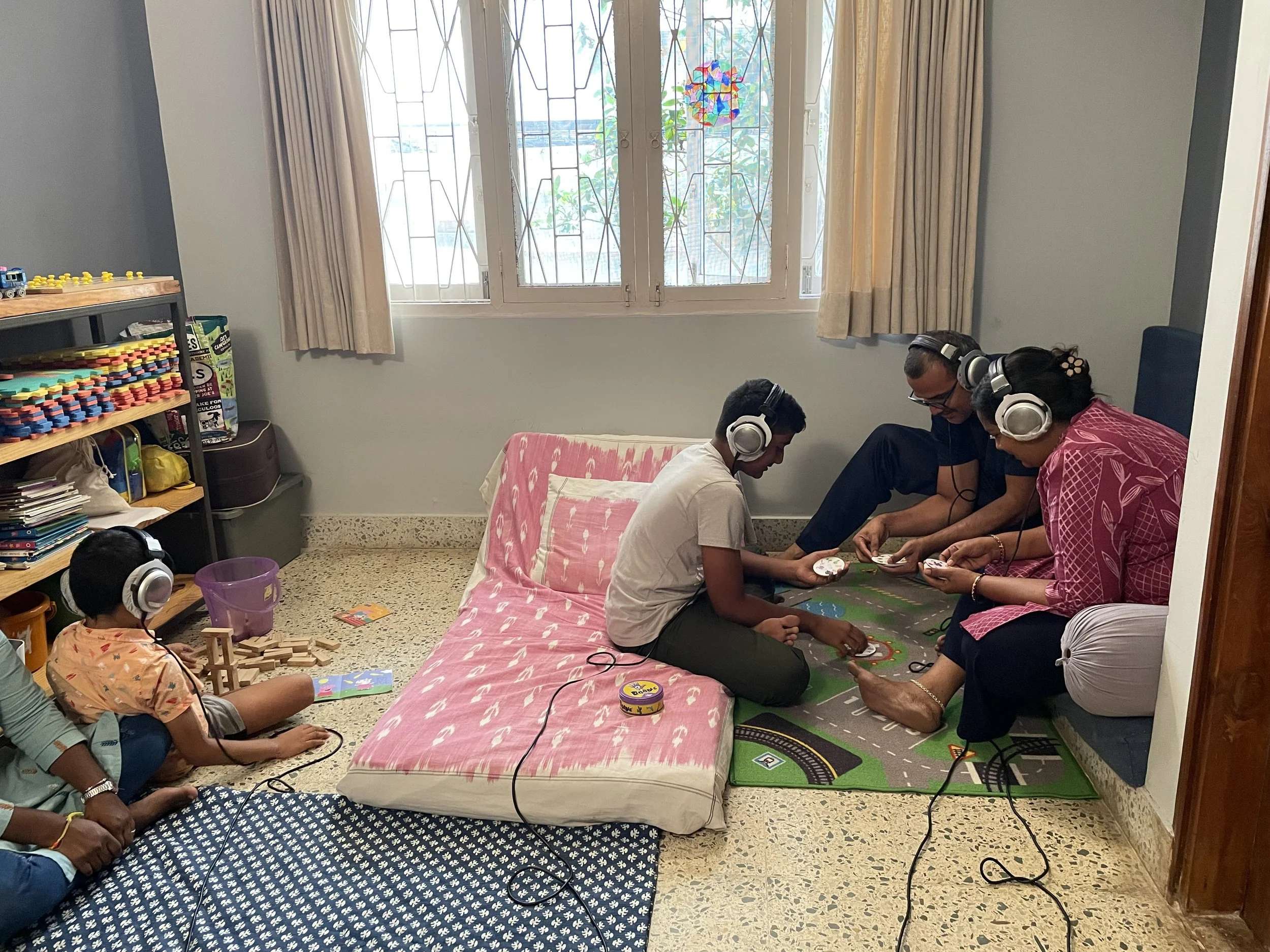
You do not have to do anything active during a session. You can relax, draw, read, play with toys (if you are a child), or even sleep. The music does the work on your nervous system. Each session lasts two hours, and a typical first phase involves 15 sessions over three weeks.
Who can benefit from SLT?
SLT is designed for both adults and children, and the range of people it helps is surprisingly broad.
For children, SLT can support those with learning and focus difficulties such as dyslexia, ADD, and ADHD. It helps children with speech and language delays, auditory processing challenges, and sensory sensitivities, including those on the autism spectrum. Many parents notice improvements in their child’s concentration, reading, emotional regulation, social engagement, and sleep.
For adults, SLT can help with chronic stress, burnout, brain fog, anxiety, and depression. It supports cognitive flexibility and can aid in learning new languages. Adults who are neurodivergent often find it a safe and restorative experience.
In short: if you or your child would benefit from better focus, calmer emotions, clearer communication, or more restful sleep, SLT is worth exploring.
What SLT is not
SLT is sometimes confused with other things, so it helps to be clear about what it is not.
It is not a hearing test. We do use a listening test as part of the assessment, but it measures how you process and perceive sound, not whether you can hear. Many people with perfectly normal hearing have listening difficulties.
It is not music therapy. Music therapy involves actively making or engaging with music for therapeutic benefit. SLT is a passive listening process where the scientifically modulated music works on the nervous system without the listener needing to do anything.
It is not sound healing. Sound healing typically uses instruments like singing bowls, gongs, or binaural beats for relaxation and wellness. SLT uses a very different approach: precise, digitally controlled frequency modulation based on decades of clinical research. (We explore this distinction in more detail in our article on SLT vs sound healing.)
What to expect at Sonum
Your journey with us begins with a warm consultation where we get to know you and your needs. We then conduct a listening test to understand your unique auditory profile. Based on this, we create a personalised listening programme.
Sessions happen at our centre in Indiranagar, Bangalore, in a quiet, home-like space designed to feel safe and comfortable. For children, we provide toys, crafts, and a calm environment. For children under 12, a parent or caregiver accompanies the session. Older teenagers can attend on their own.
The programme is structured in phases, each followed by a rest period that allows the brain to integrate the changes. At the beginning and end of each phase, we repeat the listening test to track your progress.
“He went from struggling with single words to reading a full page.” — Alafia, mother of M.A., Sonum client
Curious whether SLT is right for you or your child? Book a free consultation!